when choosing a korean unlimited content cloud server, bandwidth and protocol support are the core factors that affect performance and compliance. this article focuses on bandwidth types, uplink and downlink differences, protocol compatibility, security policies and testing methods to help product and operation and maintenance teams make reasonable choices and optimize user experience.
bandwidth usually comes in the form of peak bandwidth or metered traffic. peak bandwidth focuses on concurrent throughput, while pay-per-traffic focuses on monthly usage. when selecting, the access mode, traffic fluctuations and service level agreement (sla) need to be combined to ensure that the billing model matches the business traffic characteristics to avoid sudden traffic causing charges or performance abnormalities.
burst allows the committed bandwidth to be exceeded for a short period of time to cope with sudden loads, while committed guarantees long-term stable bandwidth. understanding the difference can help you find the balance between budget and performance. for real-time applications, it is recommended to give priority to stable committed bandwidth and cooperate with burst strategies to reduce the risk of jitter and packet loss.
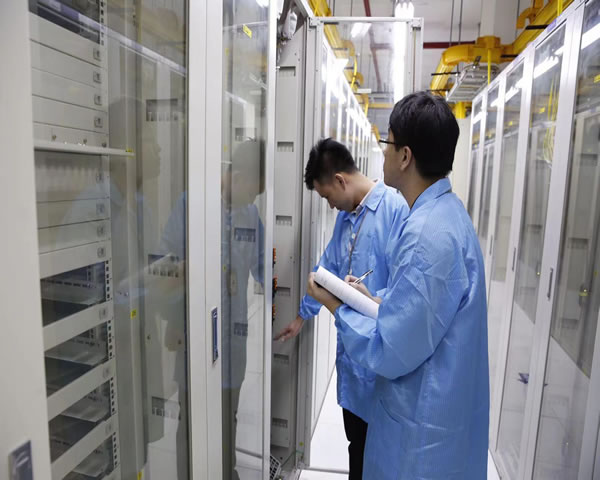
uplink bandwidth determines user upload and server streaming efficiency, while downlink bandwidth affects user download and content distribution speeds. when purchasing nodes in korea, you need to evaluate whether the target users are located in korea or overseas, and optimize uplink or downlink resource allocation to ensure stability and response speed in scenarios such as content distribution, video calls, or api calls.
bandwidth is not the only factor that determines latency, but insufficient bandwidth can cause queuing, retransmissions, and peak congestion, affecting end-to-end latency. combining bandwidth and network topology, cdn acceleration, and multi-region redundancy can significantly improve the end-user experience, especially for real-time services with high low-latency requirements.
when evaluating cloud servers, you must confirm support for common protocols (tcp/udp/icmp, etc.) and port opening policies. some content-free products may have restrictions on specific ports or protocols. check the protocol compatibility and the port forwarding and firewall rules of the management console in advance to ensure that there are no obstacles to application deployment.
tcp is suitable for reliable transmission scenarios such as web pages and databases; udp is suitable for real-time voice, video and games; icmp is used for network diagnosis. when choosing a korean unlimited content cloud server, you should confirm the operator's friendliness for udp large traffic transmission and whether it supports necessary protocol parameter adjustment and qos configuration.
protocol filtering and protection strategies are directly related to service availability and compliance. you should evaluate whether the cloud vendor provides ddos protection, traffic cleaning and flexible firewall policies, and confirm whether custom rules are allowed to meet corporate compliance and log auditing needs to avoid affecting business access due to default policies.
protection measures usually consume additional bandwidth or trigger throttling during attacks. when choosing a supplier, you should understand its attack response process and bandwidth elasticity capabilities. the ideal solution is to have automatic cleaning capabilities while ensuring normal traffic, and to quickly restore bandwidth and service availability after an attack.
bandwidth and protocol connectivity should be verified through multi-point testing, stress testing, and long-term monitoring before and after deployment. commonly used tools include bandwidth testing, ping/traceroute, stress test scripts that simulate real traffic, and traffic analysis. combined with monitoring alarms, they ensure that bandwidth bottlenecks or protocol abnormalities can be quickly located and processed.
when choosing a korean unlimited content cloud server, you should systematically evaluate the bandwidth type, uplink and downlink ratio, protocol support and security protection capabilities. it is recommended to conduct traffic modeling and testing first to clarify sla requirements and verify the supplier's protection and monitoring capabilities to achieve stable, compliant and cost-controllable deployment.
- Latest articles
- In-depth Analysis Of The Pros And Cons Of Hong Kong Server CN2 And A Guide For Small And Medium-sized Enterprises To Buy
- Discussion On Multi-location Disaster Recovery Solutions For Building High-availability Platform Cloud Servers In The Philippines And Cambodia
- Analysis Of The Current Status Of Major Server Production In The United States And Recommendations For Future Supply Chain Layout
- In-depth Technical Analysis Of CN2 Routes In Japan Detailed Explanation Of Routing Paths And Node Distribution
- Troubleshooting Guide: Common Network Faults And Solutions For Server VPS In The United States
- Practical Deployment And Maintenance Recommendations For US Site Cluster Servers For Marketing Teams
- Cultural Differences: Common Etiquette And Communication Techniques Chinese People Use Korean Servers
- How To Take A Good Group Photo Of A Korean Boy Band Standing In A Row On The Red Carpet
- Enterprise-level Analysis Of How Taiwan Server Accelerators Enhance Cross-border Access Experiences
- Buying Cloud Servers In Thailand: How To Quickly Deploy Your Business Using Images And Templates
- Popular tags
-
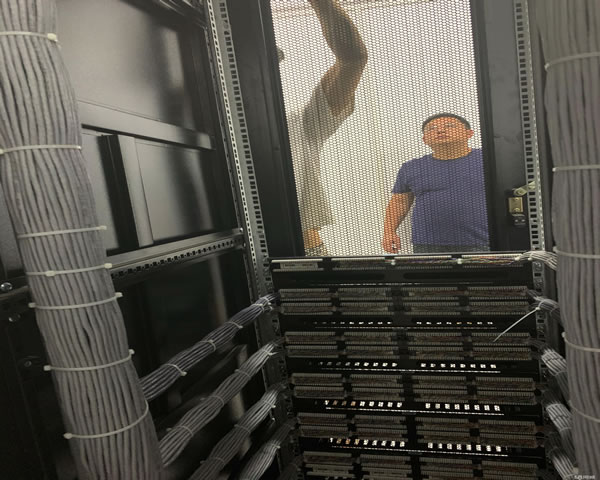
Analysis Of Best Practices In Log Management And Data Preservation Under Korean Vps Review
analyze the best practices for log management and data preservation of korean vps in a censored environment, covering compliance requirements, log collection and classification, encryption and access control, backup strategies and retention cycles, auditing and monitoring recommendations, to help operation and security teams reduce risks. -
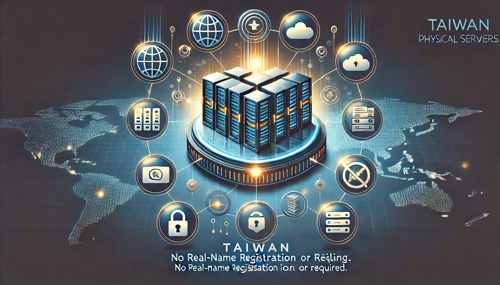
In-depth Understanding Of The Technical Architecture Of South Korea's Chuangyun Server
in-depth discussion of the technical architecture of south korea's cloud server and analysis of its key technologies and advantages in its cloud computing environment. -

The Unique Features And Market Positioning Of Korean Vps
this article explores the unique features and market positioning of korean vps, and analyzes its advantages, application scenarios and future development.